Tropical Blooms & Lush Greenery at Overlook
The lush gardens at Overlook Barbados are home to an extraordinary collection of tropical plants, each with its own fascinating story and stunning beauty. As you stroll through our peaceful North West retreat, you’ll encounter these remarkable species that transform our property into a living botanical showcase.
Pride of Barbados “Caesalpinia pulcherrima”
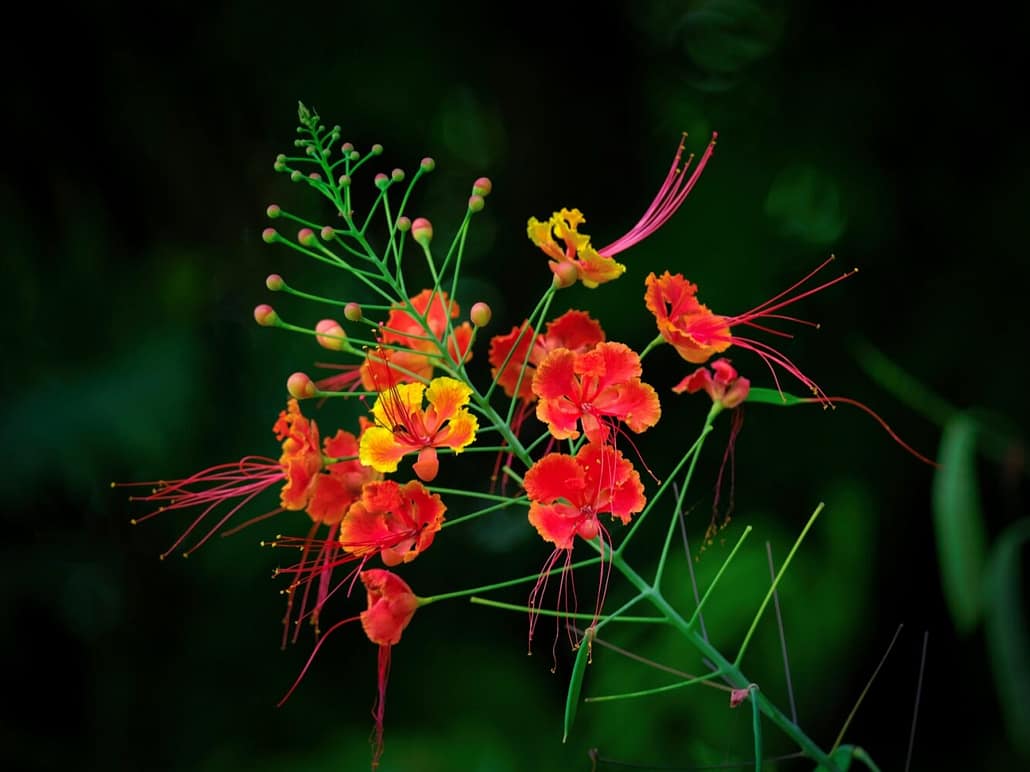
The Pride of Barbados, celebrated as the national flower of Barbados, dazzles with brilliant clusters of orange-red and yellow buds and blooms. Its long, elegant stamens add dramatic flair, making it a highlight of any tropical garden.
Origin and Appeal:
Native to the Caribbean and tropical Americas, Pride of Barbados thrives under the strong island sun and sandy soils, symbolising the vibrant culture and natural beauty of Barbados. It draws butterflies and hummingbirds to its lively display.
Appearance:
Each inflorescence bears flamboyant flowers with frilled petals marked by fiery red and radiant yellow. The slender pink stamens sweep outward, while feathery green leaves provide the perfect backdrop for the showy blossoms.
Moringa Tree“Moringa oleifera” (Drumstick Tree)“
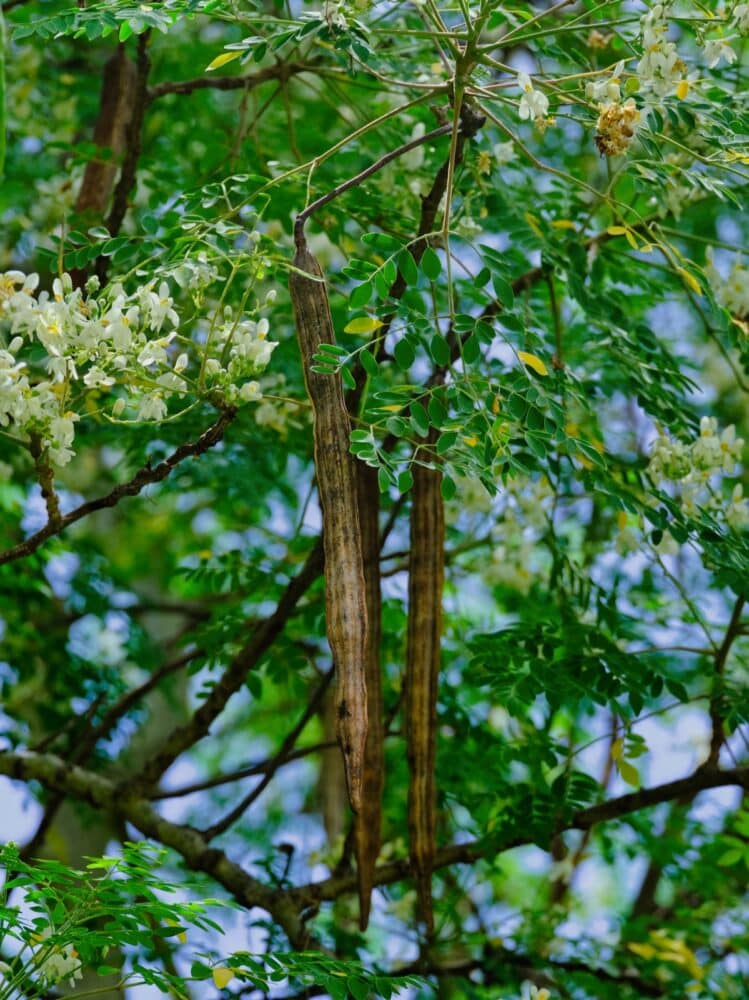
The Moringa tree, affectionately known as the Drumstick Tree, is instantly recognisable by its feathery foliage, clusters of delicate white flowers, and long, slender seed pods.
Origin and Appeal:
Native to the foothills of the Himalayas in northern India, Moringa has become cherished worldwide as a “miracle tree” thanks to its nutritional and medicinal properties. The tree thrives in warm, sunny climates, making it ideally suited to Caribbean gardens.
Appearance:
Moringa features airy, fern-like leaves, creamy white blossoms, and distinctive seed pods that hang vertically from the branches. These pods, called drumsticks, can reach up to half a metre in length and are enjoyed in culinary dishes for their health benefits. The elegant combination of softly textured leaves, fragrant flowers, and unique pods lends the Moringa both beauty and practicality in the tropical landscape.
Madagascar Periwinkle “Catharanthus roseus”
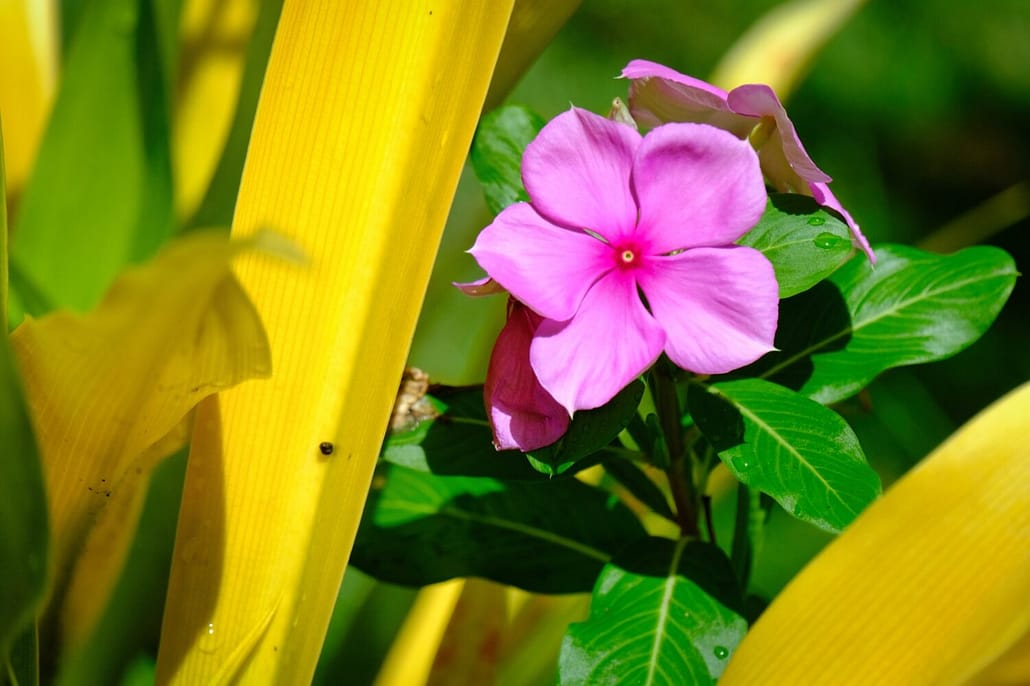
Bringing splashes of vibrant colour to our garden beds, the Madagascar Periwinkle (Catharanthus roseus) is easily recognised by its five-petaled pink flowers and glossy green leaves. This resilient plant thrives in tropical climates, blooming abundantly under the Barbadian sun.
Origin and Appeal:
Originally from Madagascar, this ornamental plant has become a garden favourite worldwide, adapting gracefully to the heat and humidity of Barbados. Beyond its beauty, Madagascar Periwinkle is renowned in medicine for compounds used in cancer treatment research.
Appearance:
The flowers are typically shades of pink, white, or purple, each sporting a distinctive star-shaped centre. Lush, dark-green foliage forms a perfect backdrop for the continuous stream of blooms, creating eye-catching contrasts in our tropical landscape.
Red Hibiscus “Hibiscus rosa-sinensis”
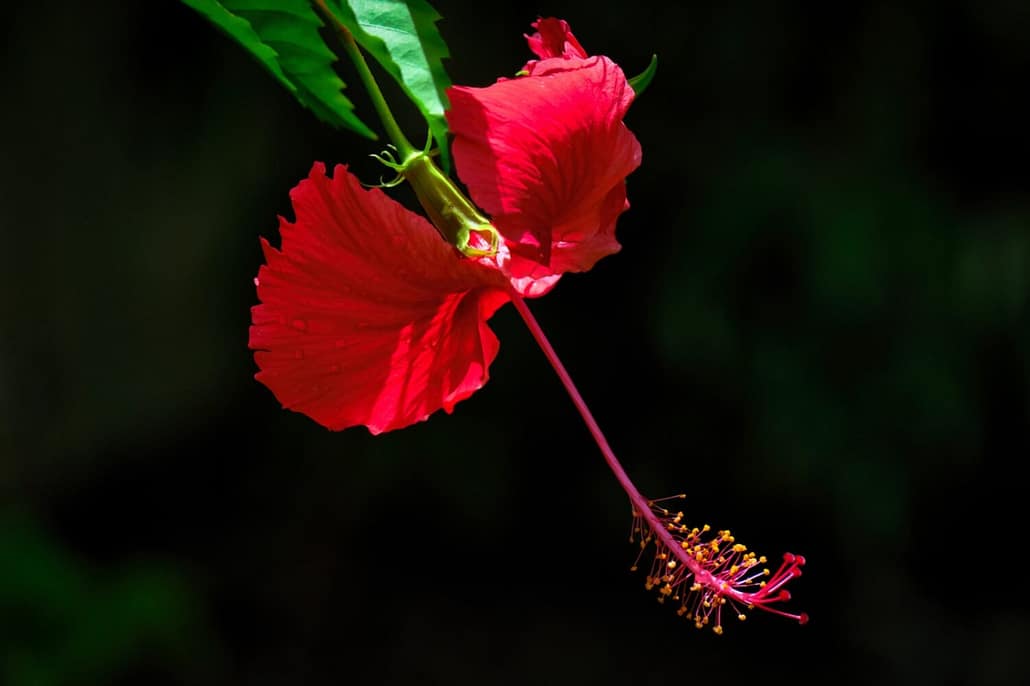
The Red Hibiscus, also known as Chinese Hibiscus, is a showstopper in our tropical garden, drawing attention with its boldly colored, broad petals and striking central stamen.
Origin and Appeal:
Native to East Asia, Hibiscus rosa-sinensis has become a beloved ornamental plant throughout the Caribbean, prized for its large, flamboyant blooms and easy growth in sunny, humid climates. The flowers are often used in traditional teas and are celebrated for their symbolic meaning in many cultures.
Appearance:
This iconic plant features vivid red, papery petals that form a large, open flower, accented by a long, protruding stamen tipped with golden pollen. Each bloom lasts just one day, but the plant produces new flowers in abundance, adding continuous colour and drama to our garden’s landscape.
Plumeria pudica“Bridal Bouquet” or “Fiddle Leaf Plumeria”
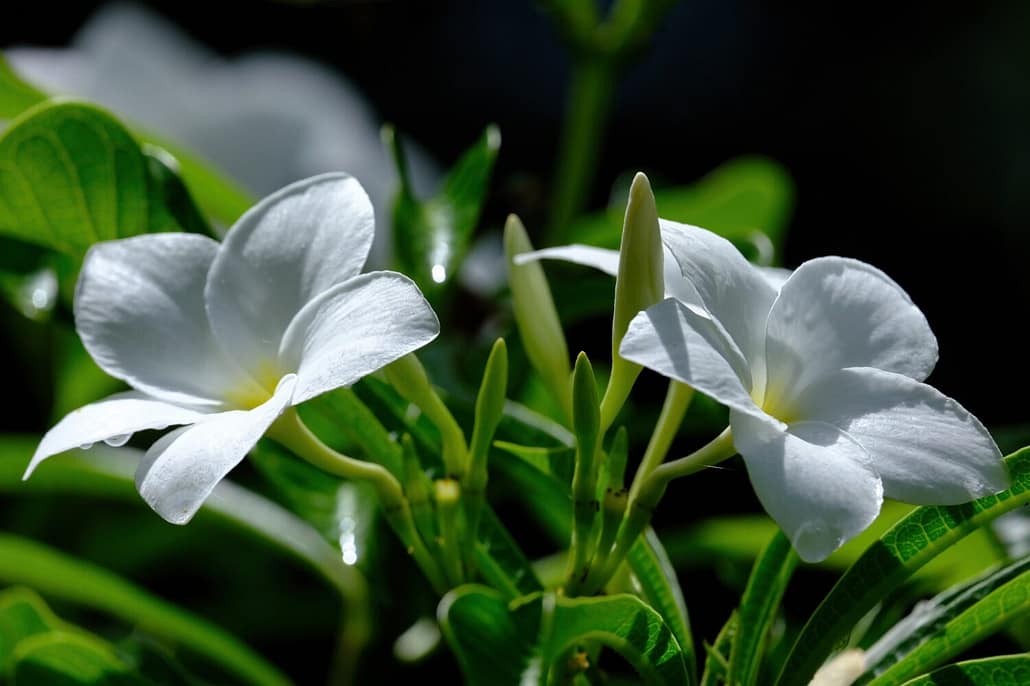
Plumeria pudica, often called Bridal Bouquet or Fiddle Leaf Plumeria, is prized in the garden for its abundant clusters of pure white, pinwheel-shaped flowers and distinctive fiddle-shaped leaves.
Origin and Appeal:
Native to Panama, Colombia, and Venezuela, this resilient plant is renowned for its almost continuous flowering habit in tropical climates. The fragrance of its blooms, light and sweet, intensifies in the evening, creating a graceful and romantic ambience.
Appearance:
The flowers are crisp white with subtle yellow centres, beautifully offset by lush, deep-green foliage shaped like a violin or fiddle. These elegant blossoms bring a touch of refinement and lasting charm to Barbados’s sun-drenched gardens.
Ixora“Flame of the Woods”
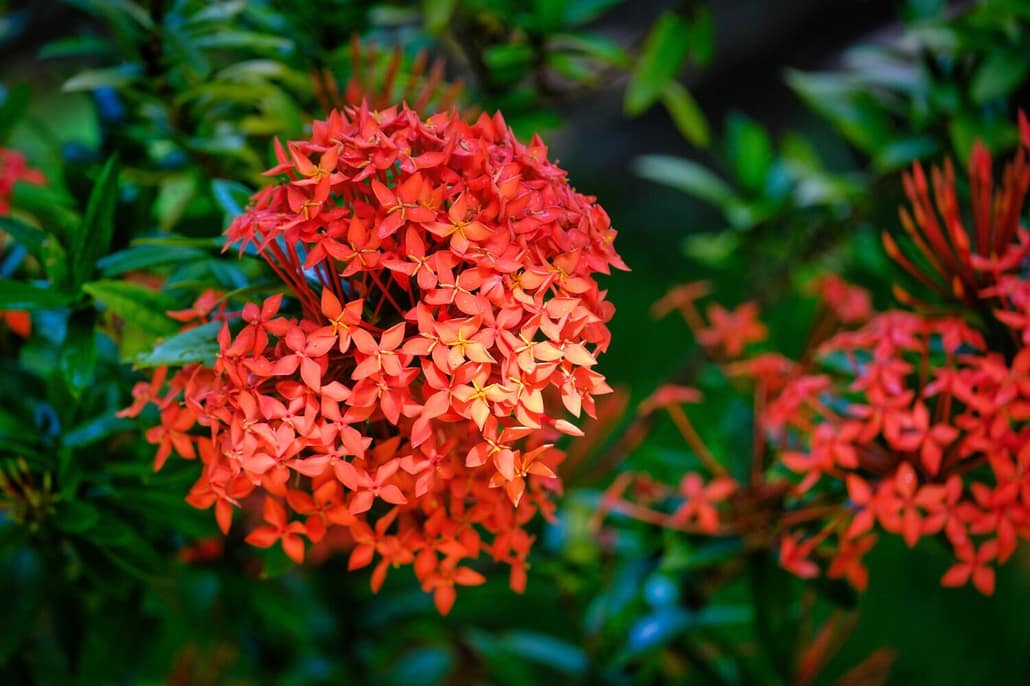
Ixora, often known as “Flame of the Woods,” delivers radiant clusters of tiny, star-shaped flowers in vivid shades ranging from crimson and orange to yellow and pink. These cheerful blooms bring bold colour and vibrancy to our tropical garden.
Origin and Appeal:
Native to South and Southeast Asia, Ixora is revered in Hindu culture and widely grown across the Caribbean. The plant is loved for its year-round flowering and its ability to attract butterflies with nectar-rich blossoms.
Appearance:
Ixora flowers form dense, rounded heads atop glossy, dark green foliage. Each flower has four narrow petals, contributing to a striking display that stands out amongst the garden’s lush greenery.
Desert Rose “Adenium obesum”
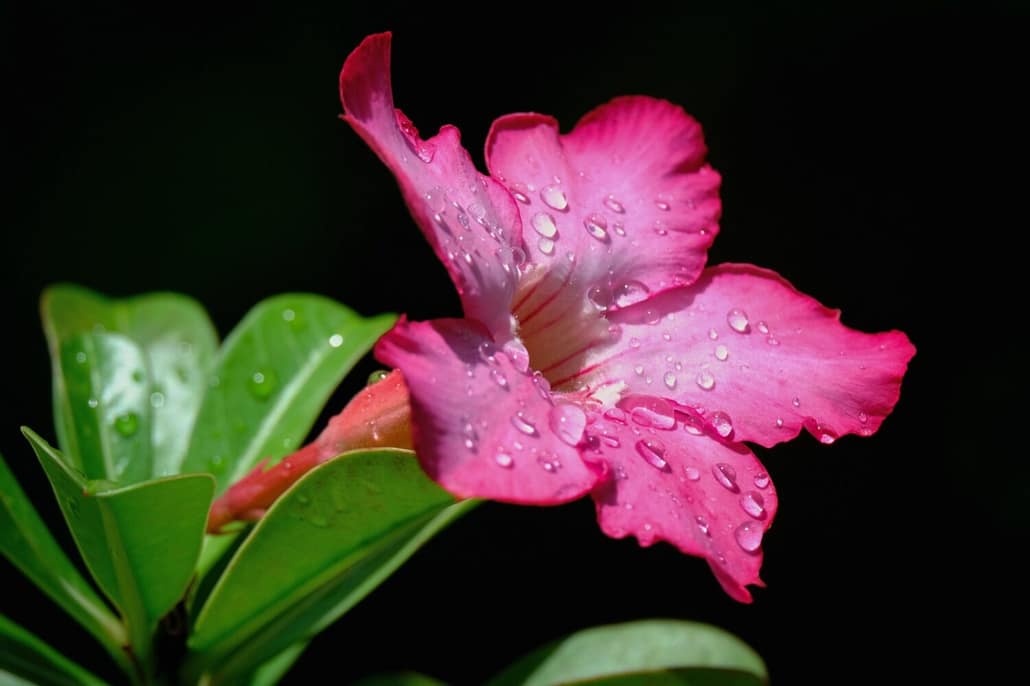
The Desert Rose (Adenium obesum) graces our garden with its vivid trumpet-shaped blooms, which range from rich pinks to brilliant reds, and its glossy, succulent-like leaves.
Origin and Appeal:
Native to the arid regions of Africa and Arabia, Desert Rose is celebrated for its sculptural, swollen stem and resilience in tropical climates. Popular in Caribbean gardens, it’s valued for its spectacular flowers and ability to thrive with minimal care.
Appearance:
The flowers are large, five-petalled and boast striking shades of deep pink or rosy red, often blushed with pale centres. Each blossom glistens after rain and stands out against fleshy green foliage and the plant’s stout, artistic trunk.
Mexican Petunia“Ruellia simplex”
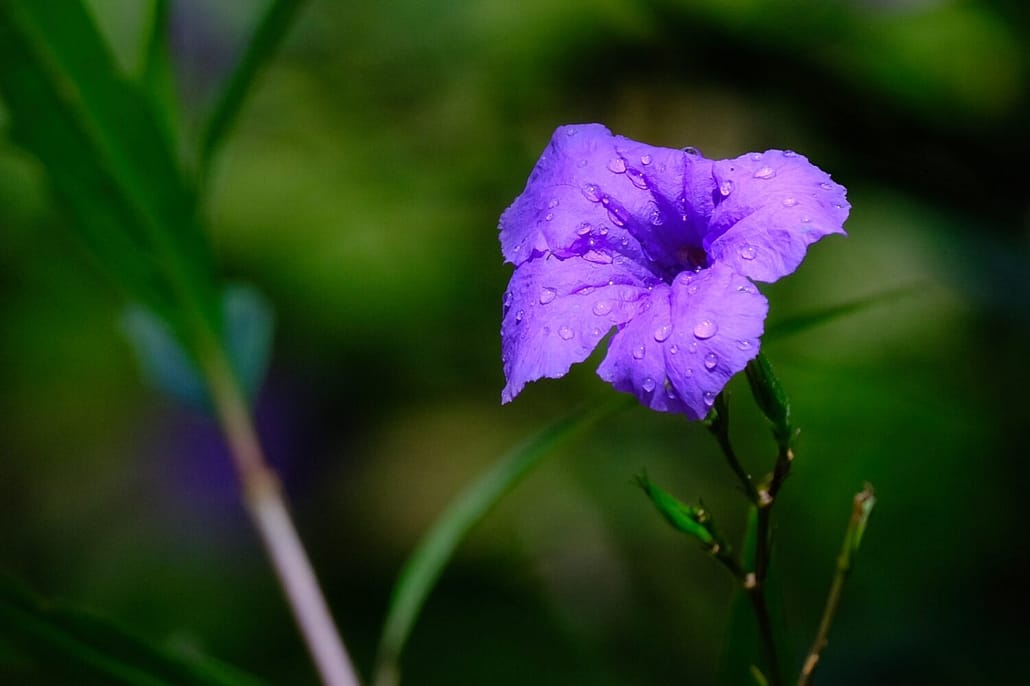
Mexican Petunia (Ruellia simplex) adorns the garden with its bold violet blooms, each petal sparkling with droplets after a morning shower. The plant adds a wild, natural charm to tropical borders and pathways.
Origin and Appeal:
Native to Mexico and South America, Ruellia simplex is appreciated for its resilience and continual flowering in hot, humid conditions. It’s a favourite for attracting pollinators such as butterflies to sunny garden spots.
Appearance:
The flowers are trumpet-shaped and typically bright purple or violet, opening anew each day. Slender green stems and narrow leaves form a lush contrast to the luminous blossoms, giving a fresh burst of colour wherever they grow.
Crown of Thorns“Euphorbia milii”
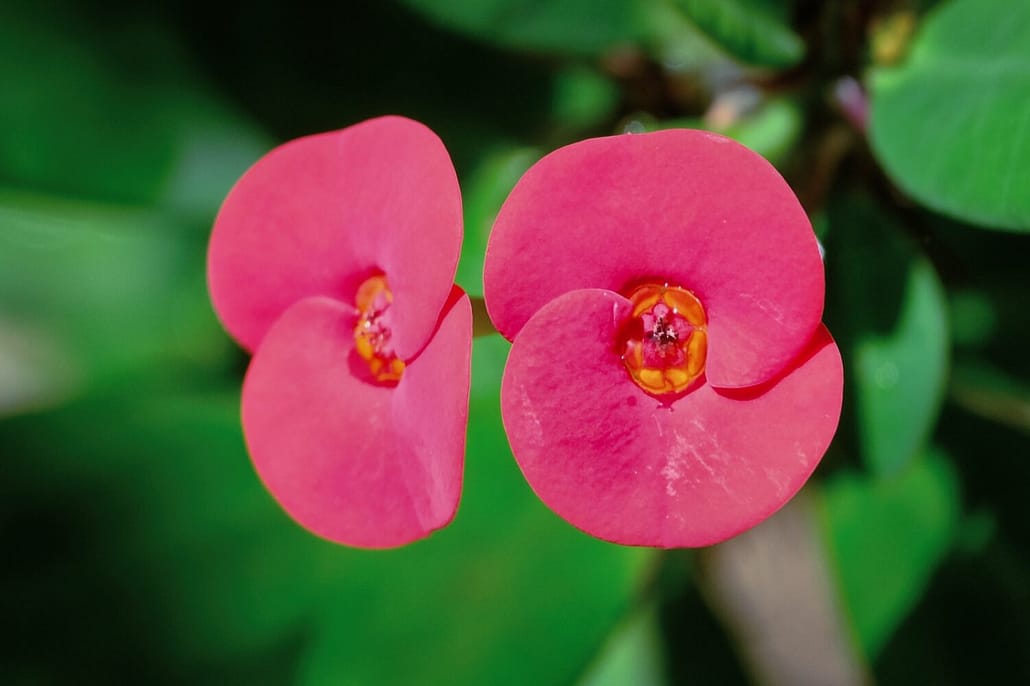
Crown of Thorns (Euphorbia milii) brightens the garden with its unique pink bracts that surround tiny golden flowers, all atop spiky stems and glossy green leaves.
Origin and Appeal:
Originally from Madagascar, Crown of Thorns is treasured for its long-lasting colour and resilience in hot, sunny conditions. It’s named for the ancient legend that its thorny stems were used in Christ’s crown, yet its pretty blossoms soften its rugged character.
Appearance:
The plant features clusters of papery, colourful bracts—often pink or red—centred around tiny yellow or orange true flowers. Succulent green leaves and sharp spines create a dramatic contrast, while the blooms can appear almost year-round in tropical gardens.
White Hibiscus “Hibiscus rosa-sinensis”
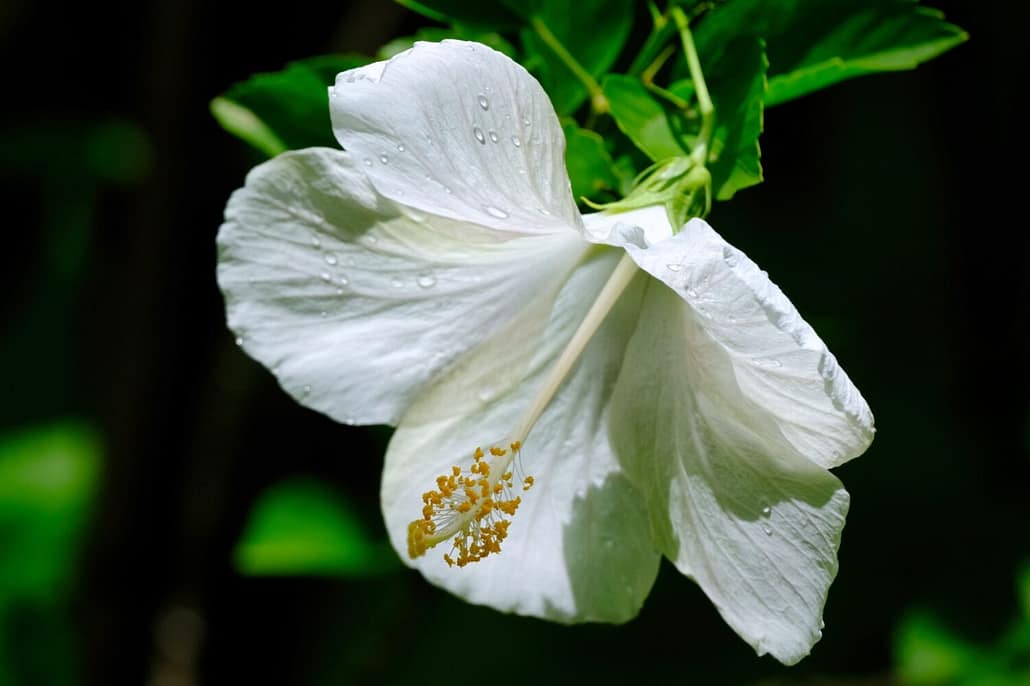
The White Hibiscus (Hibiscus rosa-sinensis) exudes understated elegance with its large, silky petals and signature prominent stamen dusted with golden pollen.
Origin and Appeal:
Introduced from Asia, this tropical beauty is celebrated throughout the Caribbean, flourishing in the heat and humidity. Its pure white blooms symbolise peace and refreshment, brightening garden corners and offering a striking contrast amongst more vibrantly coloured flowers.
Appearance:
The flower presents a broad, gently ruffled bloom with a creamy-white hue, complemented by a long, protruding style and yellow-tipped stamen. The lush green foliage and regular flowering bring an airy, timeless charm to the garden.
Golden Dewdrop“Duranta erecta”“
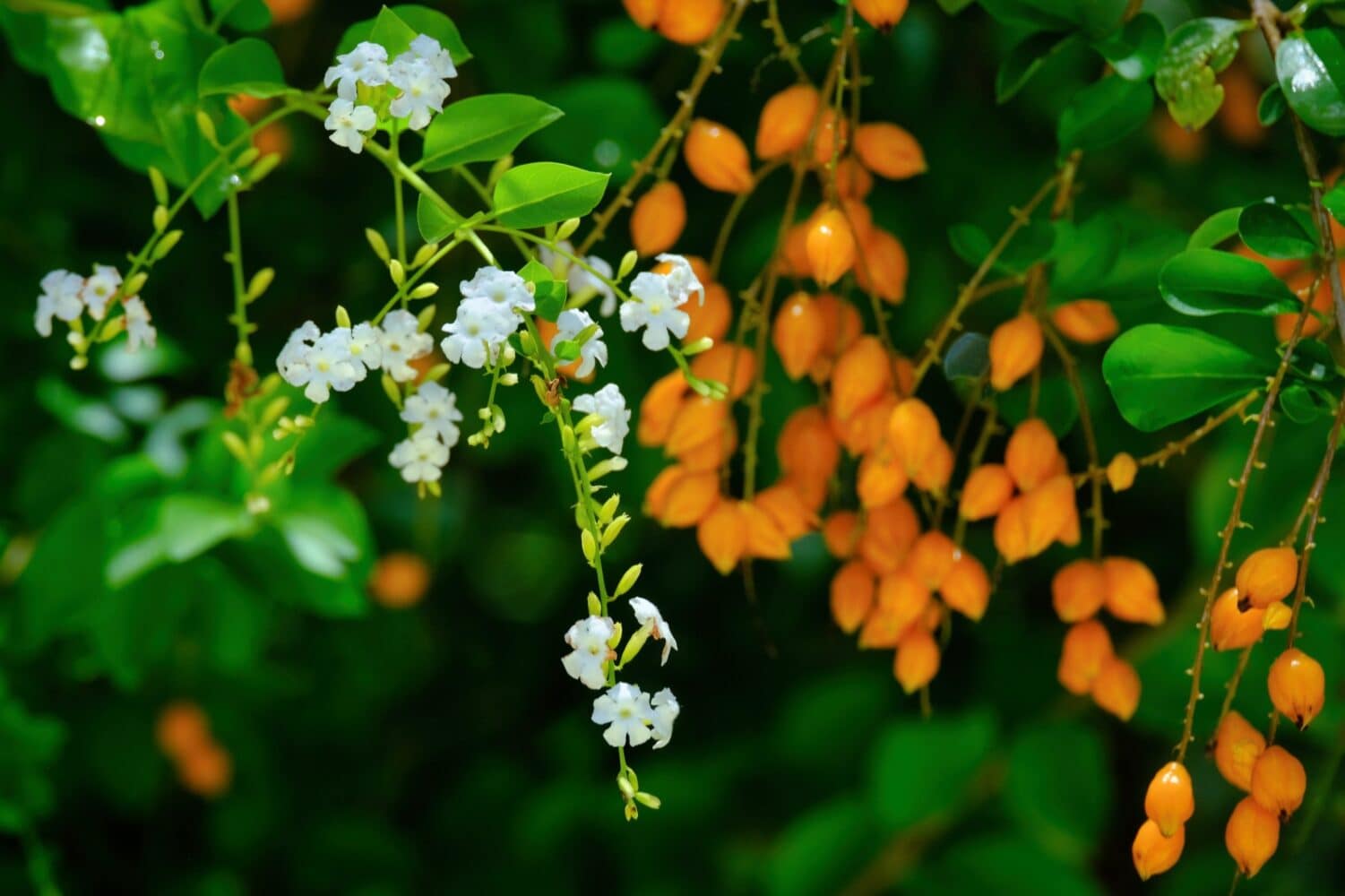
Spilling gracefully throughout our garden, the Golden Dewdrop (Duranta erecta) enchants visitors with cascades of tiny orange-yellow fruits and delicate white to pale blue flowers. This beautiful shrub, native to the Americas, is both an ornamental and ecological standout in tropical landscaping.
Origin and Appeal:
Golden Dewdrop hails from the Caribbean and Central and South America, thriving in the warm, sunny environment of Barbados. Its ornamental clusters of flowers attract butterflies, while the shiny, golden berries add a splash of vibrant color long after the blooms have faded.
Appearance:
The plant displays arching branches adorned with glossy green leaves, pendant clusters of small, tubular white or blue flowers, and abundant strings of bright yellow-orange berries. The contrast between its flowers and fruit creates visual interest in every corner of the garden.
Rain Tree“Albizia saman” (Saman or Monkey Pod)
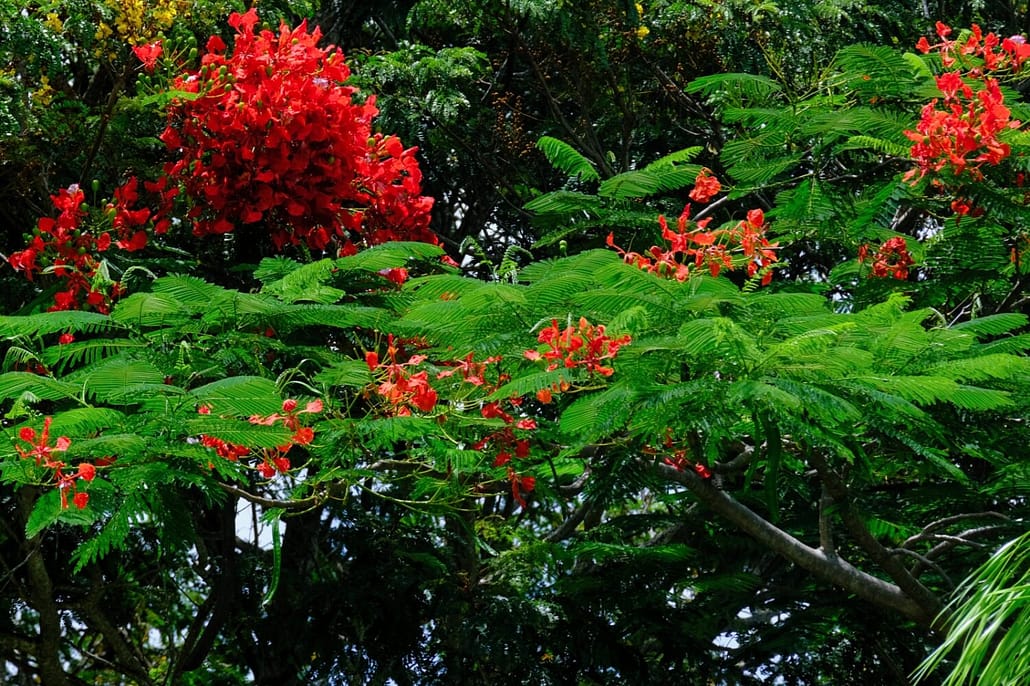
The Rain Tree is a majestic tropical tree known for its broad, umbrella-shaped canopy and delicate, fern-like leaves that provide an expansive, cooling shade.
Origin and Appeal:
Native to Central and South America, the Rain Tree is widely planted throughout tropical and subtropical regions, including the Caribbean. Its shade and ornamental value make it a favoured tree in gardens, parks, and along roadsides.
Appearance:
In addition to its considerable stature and gracefully arching branches, the Rain Tree produces fragrant, powder-puff-like flowers that range from pink to reddish hues. These blooms are composed of fine, thread-like stamens grouped in dense clusters. Long, flat seed pods mature and darken, hanging from the branches to add seasonal interest.
To conclude our botanical journey through Overlook Barbados’s garden, there’s one enchanting mystery tree worth mentioning—the Golden Shower. Known for its dazzling cascades of bright yellow flowers and long, hanging seed pods, this striking tree adds a burst of sunshine to the landscape when in bloom.
See if you can find it..