Our Resident Green Monkeys
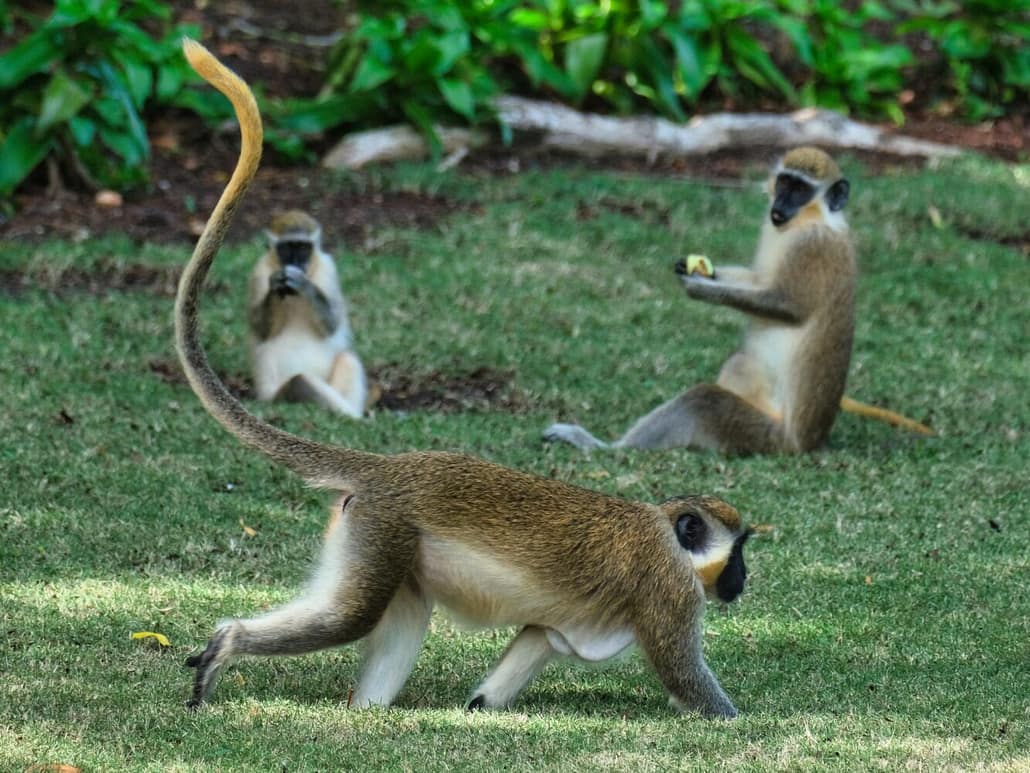
Tucked into the lush northwest coast, Overlook Barbados shares its neighbourhood with one of the island’s most beguiling residents: the Barbados Green monkey. If the day begins with birdsong and a breeze through the palms, it often adds a soft rustle in the treetops and a chorus of chattering—signs that the local troop is on the move. They pass through like clockwork in the cool of early morning and again at day’s end, transforming ordinary moments into a small slice of island magic.
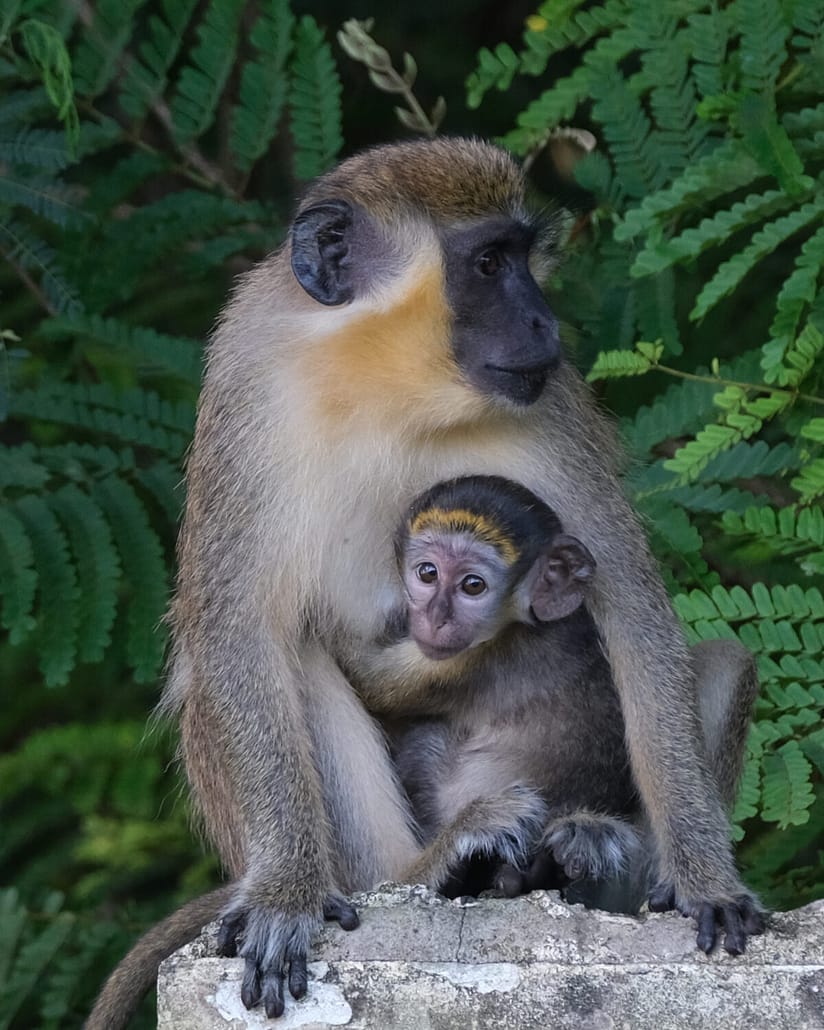
The Barbados Green monkeys are not originally native to the island. They were brought to Barbados from the regions of Senegal and The Gambia in West Africa over 350 years ago. Since their arrival, these monkeys have settled in and adapted to Barbados’ unique landscape, becoming an iconic part of island life and a treasured sight for locals and visitors alike.
A Daily Rhythm in Green
Green monkeys are diurnal, meaning they’re active in daylight and settle to sleep high in the trees at night. Around sunrise, the troop stirs from its leafy roosts and fans out across gardens, hedgerows and gullies. Early light makes their coats glow with olive-gold highlights as they slip along walls, scamper over branches, and pause to forage for fruit, young leaves and the odd insect.
Come late afternoon into sunset, they retrace their route—playful, alert and wonderfully social. This is the golden hour parade: juveniles tumbling and mock-chasing, mothers with youngsters clinging close, and watchful adults keeping the procession flowing. It’s not uncommon to see them pause in the same trees or along the same fences each evening, as if checking in on familiar waypoints before bedtime.
Troop Life: Order in the Canopy
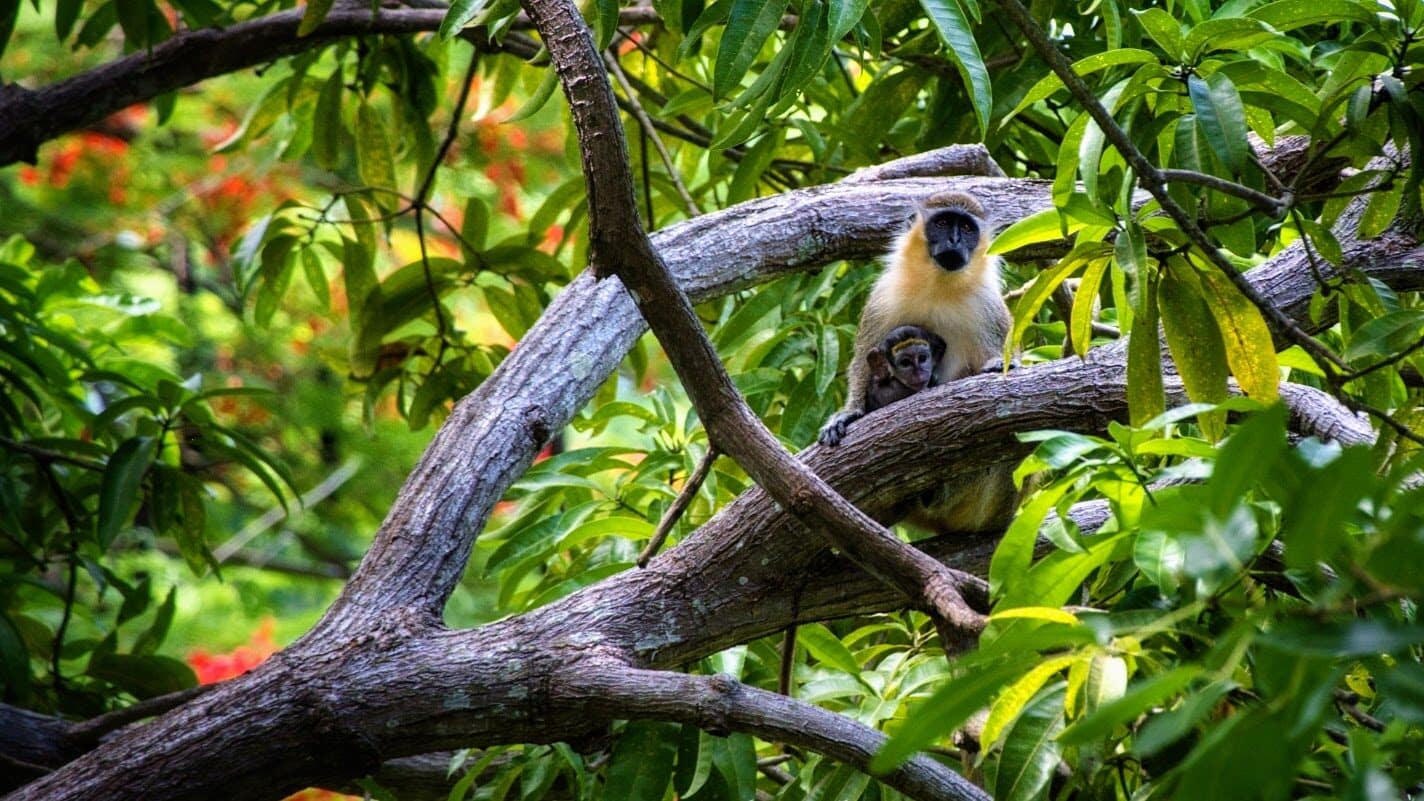
Green monkeys live in tight-knit family groups known as troops. There’s a clear social structure—experienced adults set the pace, mothers tend to youngsters, and juveniles learn the ropes through imitation and exuberant play. Grooming is their quiet language of trust: a few minutes of careful, unhurried attention cements bonds and settles spats. When a lookout lifts its head and issues a quick call, the whole troop adjusts in an instant—coordination honed by generations of island life.
Where to Spot Them
- Early mornings: Watch the left treeline as the light softens—movement often begins just after first light.
- Late afternoons: Look towards the right side of the garden and hedgerows as the heat eases; the troop is more likely to linger and play before nightfall.
- After rainfall: Damp leaves bring out new scents and snacks, and the troop sometimes moves more slowly as they forage.
Gentle Etiquette for Wild Encounters
- Observe quietly at a respectful distance—binoculars are perfect for close views without intrusion.
- Please don’t feed them. Human food disrupts their natural diet and can change their behaviour.
- Keep doors and windows closed when unattended—monkeys are ingenious problem solvers.
- Enjoy the moment. Their presence is a privilege and a reminder that nature still stitches this coastline together.
A Living Thread in the Landscape
Although not originally native to Barbados, Green monkeys have been here for centuries and are woven into daily island life—from inland gullies to coastal neighbourhoods.
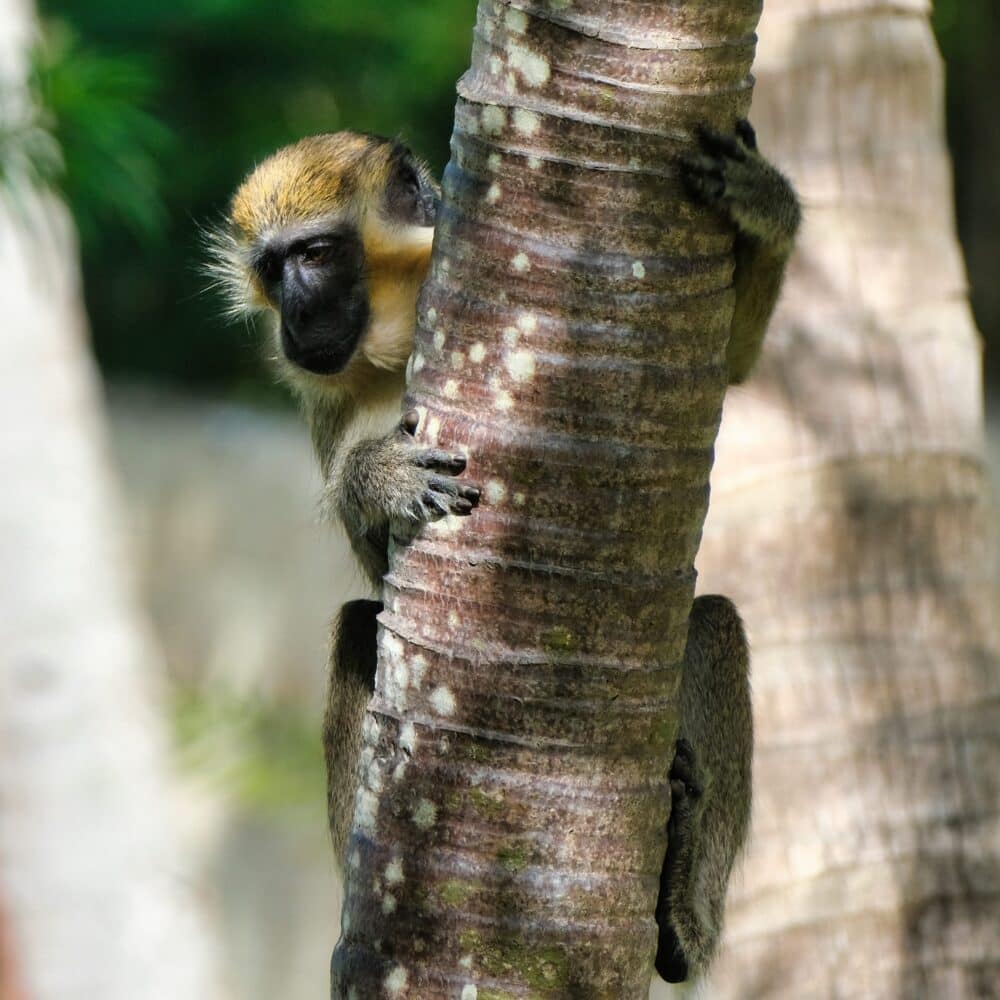
Around Overlook, they’re a gentle, ever-moving thread: a dawn patrol and a dusk parade that bookend beach days and suppers in Speightstown. Most guests leave with a favourite monkey memory—an acrobatic leap, a tiny face peering through hibiscus, the hush that falls when the troop pauses together in the trees.
Stay a few days, and the rhythm becomes familiar. Stay a week and it begins to feel like a friendship—wild, respectful, and perfectly, wonderfully Bajan.